

Compare stoneware and porcelain for family meals by weight, chipping, heat, stacking, replacement, and cleaning. This guide is written for families replacing or expanding everyday dinnerware. The goal is simple: make compare material tradeoffs for meals that include children, hot food, and dishwasher cycles easier to judge before you bring another item into the room.
Stoneware vs. Porcelain for Everyday Family Meals: Quick answer
Choose porcelain when you want a lighter, denser plate that stacks efficiently and often has a cleaner rim. Choose stoneware when you prefer a thicker, more casual feel and can accept extra weight and variation. Both can work for daily family meals. The glaze, rim shape, dishwasher guidance, and availability of replacement pieces usually matter more than the material category alone.
Compare Weight and Stack Height
A heavier plate can feel substantial and stable, but it also changes how a cabinet ages. Eight stoneware plates may require more shelf strength and space than eight porcelain plates. Porcelain often stacks flatter and is easier for children or older adults to carry. Pick up a set with several plates in the stack, not just one. Check whether the foot ring rests securely and whether the plates slide when nested. A small stack height difference matters when the cabinet has fixed shelves. If dishes are stored above shoulder height, lighter plates may be safer and more comfortable.
Look at the Rim and Glaze
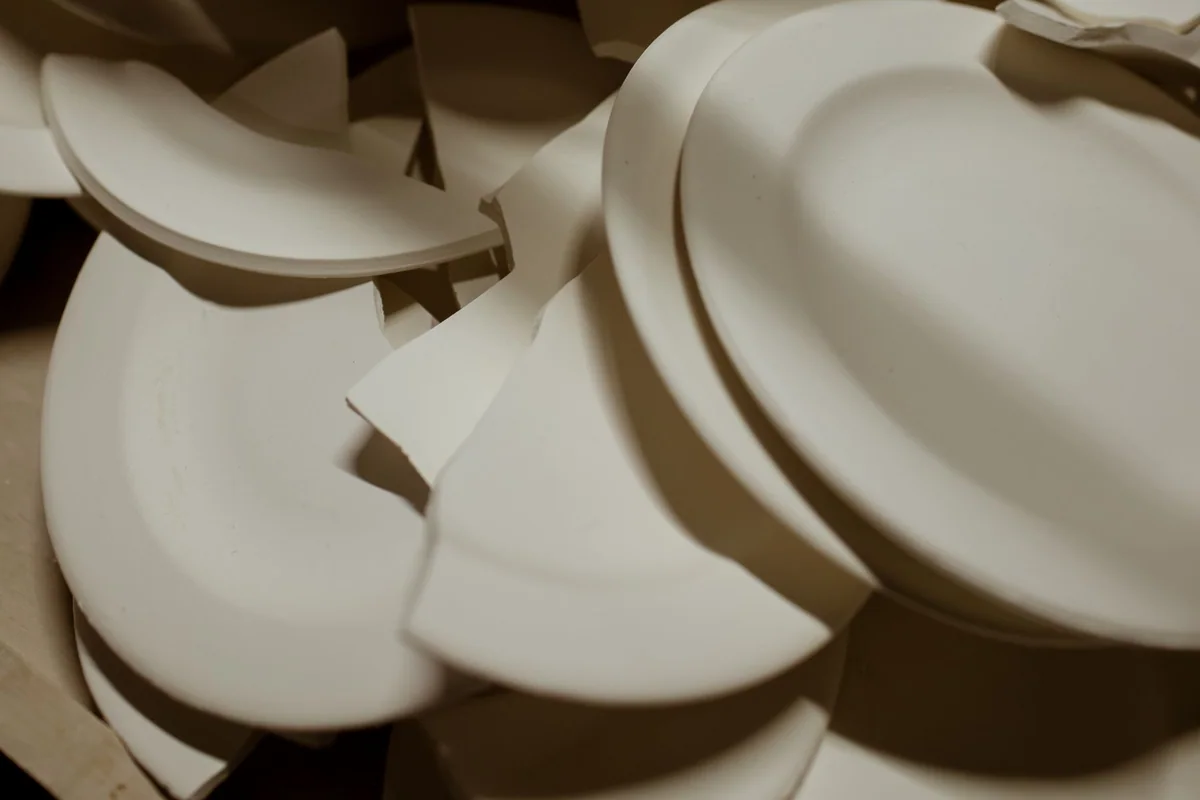
Chips often happen at rims, feet, and handles. A rolled or reinforced rim may be more forgiving than a thin decorative edge. Matte glazes can show utensil marks and absorbing oils, while glossy finishes may reveal scratches from knives. Reactive glazes create appealing variation, but replacement pieces can differ visibly. Check the manufacturer's guidance for microwave and dishwasher use, and do not assume all stoneware is oven safe. If the meal includes hot casseroles, a plate that can hold heat without cracking is important. Confirm the specific product's thermal limits.
Compare Heat and Cleaning
Porcelain and stoneware both retain heat, but density and thickness change how quickly a plate warms. A thicker stoneware plate may feel hot longer after a dishwasher cycle, while a thin porcelain plate may cool faster. Most everyday sets are dishwasher safe, but the detergent and cycle can affect glaze over time. Heavily stained pieces may benefit from a presoak or a manufacturer-approved cleaner. Avoid thermal shock by letting dishes cool before adding cold water or moving them from a hot oven to a wet sink.
Plan Around Children and Guests
Families with young children may prefer a lighter plate that is easy to carry and less expensive to replace. A set that mixes large and small plates lets children use the smaller size for portions without the meal looking like a special occasion. Guests may appreciate a bowl that holds a full serving. If the household often eats in the living room, choose pieces with stable bases and a shape that does not overflow. Decorative chargers and oversized plates are less useful for everyday meals than a comfortable bowl and a plate that fits the dishwasher.
Consider Replacement and Expansion
A dinnerware set is never truly finished. Pieces chip, move to another home, or become the favorite bowl. Check whether the retailer sells open-stock pieces and whether the pattern is likely to remain available. Buy an extra set of the most-used size if storage allows. A neutral porcelain set may be easier to mix with new serving pieces, while a distinctive stoneware glaze becomes the visual signature of the table. If the household changes over time, a set with simple geometry and a common size is easier to integrate with existing pieces.
Choose a Daily Standard
The best material is the one that makes a normal meal easier. If lighter dishes reduce the effort of unloading the dishwasher, porcelain may win. If a thick, relaxed plate makes the table feel more comfortable, stoneware may be worth the weight. Avoid buying an entire set for a rare holiday. Keep one practical stack for everyday use and only add specialty pieces when they solve a repeated need. A dish should feel right in the hand and fit the cabinet before it appears on a wish list.
Compare the right category
Stoneware vs. Porcelain for Everyday Family Meals: What we would shortlist
These are product categories to compare, not claims about a specific model. Check dimensions, material care, return terms, and the latest retailer information before ordering.
Start here
lightweight porcelain plates
- Best for
- families that stack and carry dishes daily
- Look for
- strong rims, open stock, dishwasher guidance, and a size that fits the cabinet
- Tradeoff
- thin edges can still chip if handled carelessly
Best for a tighter footprint
casual stoneware set
- Best for
- relaxed meals and a collected table look
- Look for
- even glaze, comfortable weight, microwave guidance, and replacement pieces
- Tradeoff
- pieces are heavier and can take more shelf space
Worth comparing for value
mixed-size open-stock set
- Best for
- households with children or varied portions
- Look for
- small and large plates that stack, stable bowls, and interchangeable care instructions
- Tradeoff
- too many sizes can complicate storage
Stoneware vs. Porcelain for Everyday Family Meals: Questions to ask before you buy
Which material is less likely to chip?
It depends on the rim, manufacturing quality, and handling. Porcelain can be very durable when made with a reinforced edge, while stoneware can be more forgiving in other designs. A thick plate is not automatically safer. Look for a stable foot, a well-finished rim, and replacement availability, then handle the pieces as carefully as your household realistically can.
Can stoneware and porcelain go in the microwave?
Only when the specific product says it is microwave safe. Material category alone is not enough because glaze, metallic decoration, and thermal shock can matter. Check the manufacturer's instructions and avoid sudden temperature changes. If a piece becomes very hot while the food remains cool, stop using it in the microwave.
Are heavier plates better for family meals?
Weight can make a plate feel substantial, but heavier is not always better. A plate that is difficult to carry or stack can cause more accidents. Choose a weight that is stable on the table and comfortable for the people who unload the dishwasher. Children may handle a smaller, lighter plate more successfully.
A final practical check
Stoneware vs. Porcelain for Everyday Family Meals: Before this purchase comes home
Recheck the exact dimensions in the room, the return window, and the cleaning method for the material you selected. Confirm that the new item supports compare material tradeoffs for meals that include children, hot food, and dishwasher cycles for families replacing or expanding everyday dinnerware, rather than solving only the photograph on the retailer page. Keep the packaging until the product has been used in its intended place, and save the order details in case a replacement part or measurement confirmation is needed later.
If two options still seem close, choose the one with the simpler care routine, clearer replacement parts, and a size that leaves a comfortable route through the room. A thoughtful purchase should make the everyday version of the room easier, not just the first day after delivery. Revisit this guide after living with the item for a week and adjust the layout, storage, or routine before buying another piece.
 Dinnerware Sets for Households That Entertain Casually
 Compact Coffee Stations for Tight Kitchen Corners
 Bar Stools That Fit a Kitchen Island Without Blocking Knees