

Plan a compact coffee station that keeps daily tools accessible, protects the counter, and avoids crowding a small kitchen. This guide is written for small-kitchen households looking for a dedicated coffee area without adding a bulky appliance. The goal is simple: make organize coffee gear in a compact corner with safe power and easy cleaning easier to judge before you bring another item into the room.
Compact Coffee Stations for Tight Kitchen Corners: Quick answer
Measure the counter depth, outlet height, and clearance above the machine before choosing a station. Keep only daily coffee tools on the surface and move bulk supplies to a nearby cabinet. A narrow tray or pull-out shelf can contain drips and make cleanup easier. If the corner is very tight, a rolling cart may provide more flexibility than fixed cabinetry, but it must not block the refrigerator or cooking zone.
Measure the Whole Work Zone
A coffee maker needs more than its footprint. Measure the base, the height from the counter to the top of the machine, the open lid or hopper, and the clearance for a mug. Confirm the outlet location and whether the plug will be blocked by a cart or backsplash. Leave enough room to open the water reservoir and remove the drip tray. If the machine sits under a cabinet, check the steam path and follow the manufacturer's clearance guidance. Tape the dimensions on the counter for a day before committing to a station layout.
Choose Containment Over More Storage
A small tray keeps pods, spoons, and drips from spreading across the counter. Choose a tray with a raised edge and a surface that is easy to wipe. If the counter is very narrow, use a single drawer organizer for filters and a small canister for beans. Avoid stacking cups under upper cabinets where they can be knocked over. A wall-mounted rail or a slim riser can create useful vertical space, but only when it does not make the machine difficult to fill or clean. Keep the station focused on the items used every morning.
Plan Power and Water Safely
Coffee machines combine water and electricity, so the outlet must remain accessible and protected from splashes. Do not run a cord across a sink or stovetop, and do not pinch it behind a cart wheel. A GFCI outlet is appropriate in a kitchen, but the user should not modify wiring without a qualified electrician. Check whether the machine needs a dedicated circuit or has a high wattage demand. Keep the reservoir where it can be removed and refilled without lifting the entire machine. If the cord is too short, choose a different location rather than using a damaged extension cord.
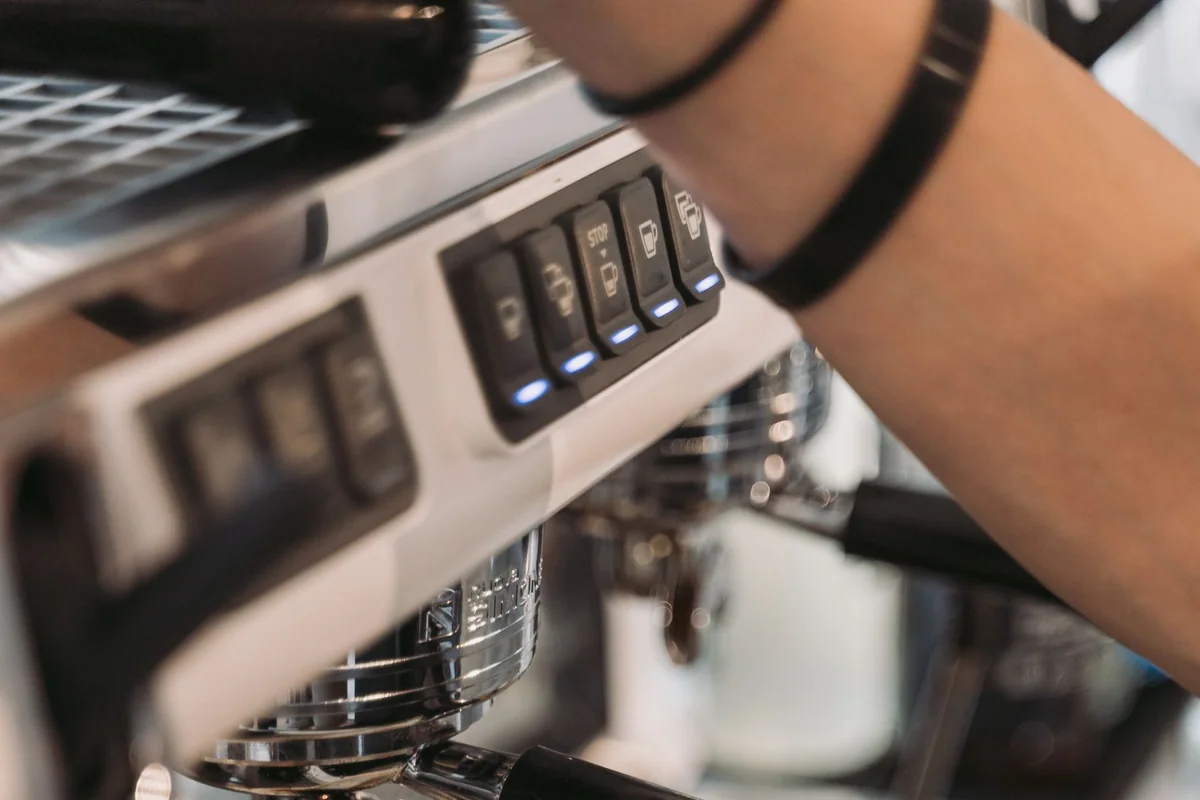
Use a Cart Only When It Can Move
A rolling cart can turn a narrow wall into a coffee station and roll away for cleaning. Measure the wheels, handle, and turning radius, then check the floor transition at the kitchen edge. The cart should lock or remain stable when the machine is in use. Do not place it where it blocks a refrigerator door, oven, dishwasher, or main path. If the cart holds a heavy machine, choose a model with a weight rating that includes the coffee, water, and supplies. Fixed furniture may be safer when the floor is uneven or the station will never move.
Create a Morning and Evening Reset
Empty the grounds or pods after the morning routine and wipe the tray while the machine cools. Refill the water reservoir only when the manufacturer permits overnight storage, or empty it if recommended. A small covered bin can hold used grounds until they are composted or discarded. Keep a microfiber cloth near the station, but store it where it will not stay damp against the counter. Once a week, move the machine and clean underneath. A station stays useful when its mess can be reset in less than five minutes.
Compare Compact Equipment Before Buying
A smaller machine is not automatically easier to use. Check reservoir capacity, brew time, pod or filter availability, and the size of the carafe or cup. A machine with a fixed water tank may be difficult to fill in a tight corner. A manual pour-over setup can save space but adds a kettle and a slower routine. Single-serve machines reduce cleanup but create ongoing pod costs. Choose the format that matches the household's daily volume and the amount of counter space it can truly dedicate.
Compare the right category
Compact Coffee Stations for Tight Kitchen Corners: What we would shortlist
These are product categories to compare, not claims about a specific model. Check dimensions, material care, return terms, and the latest retailer information before ordering.
Start here
narrow spill tray
- Best for
- protecting counters around a coffee maker
- Look for
- raised edges, a removable drip surface, and dimensions that fit under the machine
- Tradeoff
- a tray that is too small will not catch overflow
Best for a tighter footprint
rolling utility cart
- Best for
- rentals and kitchens that need movable storage
- Look for
- locking casters, a weight rating, a stable top, and a footprint that clears appliances
- Tradeoff
- wheels can mark soft floors or struggle over thresholds
Worth comparing for value
airtight coffee canister
- Best for
- keeping beans or grounds near the station
- Look for
- a true seal, opaque body, easy scoop access, and a size that matches weekly use
- Tradeoff
- large canisters take counter space and may expose beans to more air on each open
Compact Coffee Stations for Tight Kitchen Corners: Questions to ask before you buy
Can a coffee maker sit under upper cabinets?
Only when the manufacturer's clearance instructions allow it. Steam, heat, and a lifted lid or hopper can damage the cabinet or make the machine difficult to fill. Measure the open position, not only the closed height. If clearance is tight, move the machine to an open counter or choose a lower-profile model.
Is a rolling cart a good coffee station?
It can be useful in a rental or a small kitchen because it moves for cleaning. Choose locking casters and a cart that stays outside the main work path. The top must support the machine, water, and supplies. If the floor is uneven or the cart wobbles, a fixed cabinet or countertop tray is safer.
How much counter space does a coffee station need?
Measure the machine's base plus the space to open the reservoir, remove the drip tray, and set down a mug. A narrow strip can work if supplies move to a drawer or cabinet. Leave enough room to wipe around the machine, because spilled coffee and grounds will accumulate in a tight corner.
A final practical check
Compact Coffee Stations for Tight Kitchen Corners: Before this purchase comes home
Recheck the exact dimensions in the room, the return window, and the cleaning method for the material you selected. Confirm that the new item supports organize coffee gear in a compact corner with safe power and easy cleaning for small-kitchen households looking for a dedicated coffee area without adding a bulky appliance, rather than solving only the photograph on the retailer page. Keep the packaging until the product has been used in its intended place, and save the order details in case a replacement part or measurement confirmation is needed later.
If two options still seem close, choose the one with the simpler care routine, clearer replacement parts, and a size that leaves a comfortable route through the room. A thoughtful purchase should make the everyday version of the room easier, not just the first day after delivery. Revisit this guide after living with the item for a week and adjust the layout, storage, or routine before buying another piece.
 Dinnerware Sets for Households That Entertain Casually
 Stoneware vs. Porcelain for Everyday Family Meals
 Bar Stools That Fit a Kitchen Island Without Blocking Knees