
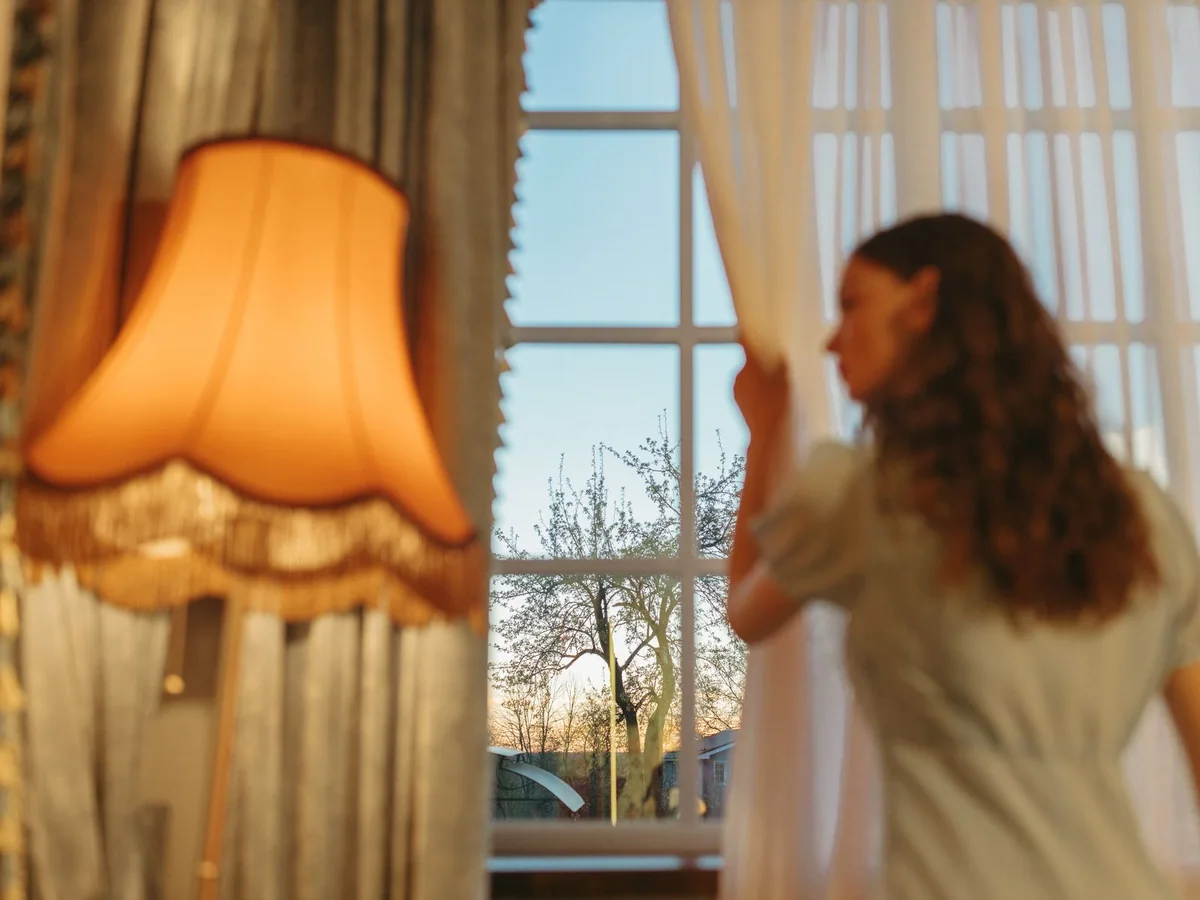
Reduce daytime light in a shift worker's bedroom with layered window treatments that close well and fit the wall. This guide is written for shift workers and daytime sleepers who need a darker, quieter bedroom. The goal is simple: make block light effectively without making the room difficult to open, clean, or ventilate easier to judge before you bring another item into the room.
Sleep-Friendly Window Treatments for Shift Workers: Quick answer
Use a room-darkening curtain or shade that overlaps the window frame, then add a second layer to close side gaps. Measure the full opening and install the treatment wider and taller than the glass when the wall allows. Blackout fabric alone may not seal light; returns, tracks, or magnetic edges can help. Keep the room cool and use a low night light for safe movement between sleep periods.
Measure the Gaps, Not Only the Glass
Light enters around the edges of a poorly fitted treatment as well as through the fabric. Measure the window opening, the trim, the wall space above and beside it, and any obstructions such as handles or air vents. If the wall allows, mount the treatment several inches beyond the frame on each side and above the top. A wide panel can overlap the edges and reduce leaks at the sides. Record the distance from the floor to the sill and confirm where the cords or controls will sit. A dark room depends on coverage geometry as much as the material.
Choose the Right Layer for Each Leak
A roller shade can cover the glass closely, while a curtain can overlap the wall and soften the room. A cellular shade may offer insulation and a clean edge, but not every model is room-darkening. A blackout curtain may block direct light but leak around the sides. Combining an outside-mount shade with a curtain, or using a track that follows the frame, can close more gaps. Check whether the product blocks light or only reduces it; the labels are not interchangeable. The best setup depends on the window type and how much space is available above it.
Plan for Ventilation and Temperature
A dark bedroom still needs airflow, especially when daytime sleep occurs during hot weather. Do not seal a window in a way that blocks a functioning vent or makes the room unsafe. Choose materials that do not trap excessive heat, and keep the air path around the window clear. If an air conditioner sits in the window, measure around it and use a side panel that fits. A ceiling fan or portable fan can improve comfort, but it should not create glare or a distracting light. The treatment should support sleep without preventing safe ventilation.
Make Quiet Part of the System
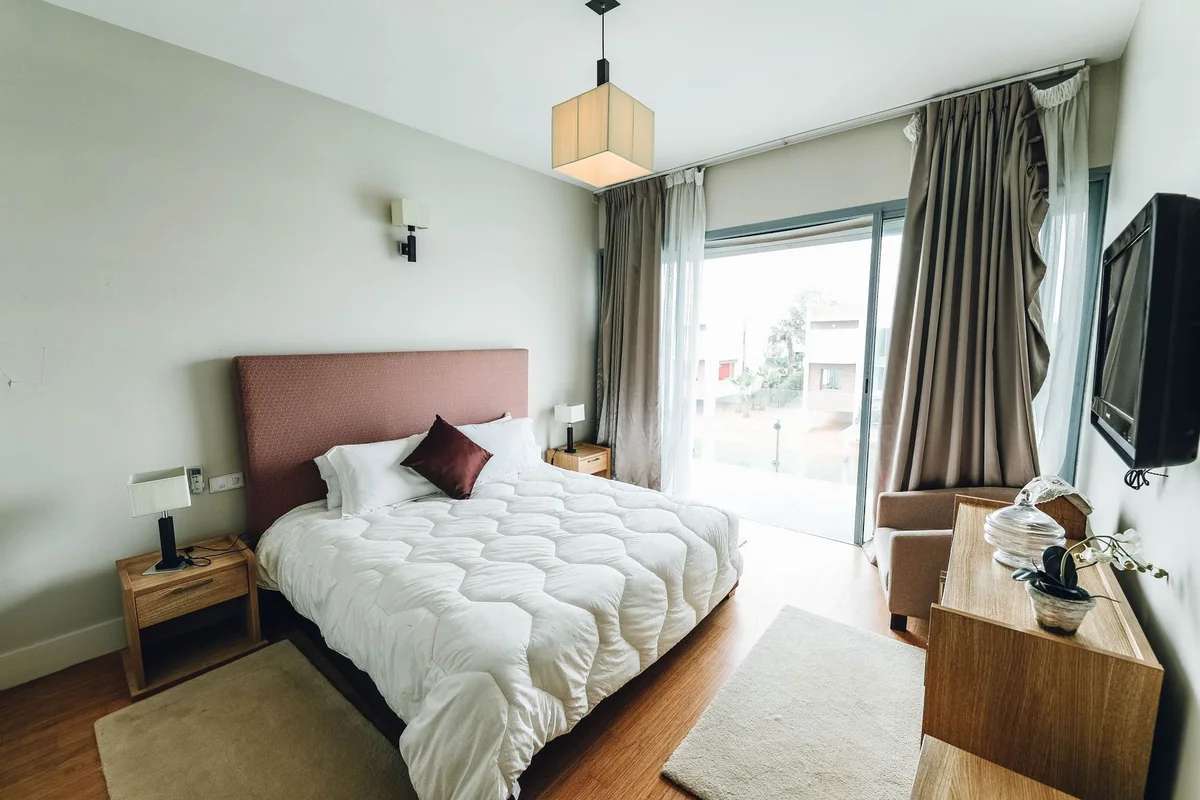
Light is often only one obstacle for daytime sleepers. Traffic, neighbors, and household activity can interrupt sleep even in a dark room. Curtains with a heavier weave may soften some sound, but they are not a substitute for proper acoustic treatment. A sound machine can add consistent background noise without masking an alarm. Place it away from the bed and check the volume. If the bedroom shares a wall with a noisy room, consider door sweeps, rugs, and upholstered surfaces before buying another window panel. Address the most disruptive source first.
Keep Controls Accessible
A treatment that is difficult to open can reduce daylight and ventilation during waking hours. Choose a cordless shade, a wand control, or a motorized option if reaching the window is awkward. Test the operation from the bed and from the doorway. If the window is behind furniture, leave enough clearance for the shade to rise fully. Motorized products need power and a plan for outages, while manual products need safe cord management. For renters, choose inside-mount or removable options that fit the lease. Convenience decides whether the darkening system is used consistently.
Build a Repeatable Day-Sleep Routine
Close the room-darkening layer before the brightest part of the day, then check for light strips along the sides, top, and bottom. Use a sleep mask for residual leaks if needed. Keep a small red or amber light for moving around, and charge devices outside the bedroom when possible. Set the room temperature before sleep and use a fan for air movement. After waking, open the treatment fully and expose the room to daylight to reinforce the routine. A consistent environment is more useful than a single expensive window product.
Compare the right category
Sleep-Friendly Window Treatments for Shift Workers: What we would shortlist
These are product categories to compare, not claims about a specific model. Check dimensions, material care, return terms, and the latest retailer information before ordering.
Start here
outside-mount blackout roller shade
- Best for
- windows with space above and beside the frame
- Look for
- accurate overlap, side channels or a close frame, a low-glare backing, and cordless operation
- Tradeoff
- hardware may require drilling and can be difficult in a rental
Best for a tighter footprint
room-darkening curtain panel
- Best for
- bedrooms that also need softness and color
- Look for
- a wide panel, a wrapped return, a track or overlap, and fabric that hangs close to the wall
- Tradeoff
- side light can still leak unless the panel overlaps the frame
Worth comparing for value
blackout sleep mask
- Best for
- residual light when window coverage cannot be perfect
- Look for
- adjustable fit, soft edges, breathable fabric, and a design that does not press on the eyes
- Tradeoff
- it can shift during sleep and is not a solution for room light alone
Sleep-Friendly Window Treatments for Shift Workers: Questions to ask before you buy
Do blackout curtains completely darken a room?
Usually not by themselves. Blackout fabric blocks much of the light passing through the material, but light can enter around the top, sides, and bottom. The room becomes darker when the panel overlaps the frame, hangs close to the wall, and is paired with a shade or track. Check the actual room near the brightest part of the day.
Are cellular shades good for shift workers?
They can be, especially when the model is room-darkening and installed outside the frame. Cellular shades offer a clean edge and may provide insulation, but light can still leak around the sides. Some windows need a side track or a curtain layer. Compare the product's light-blocking rating with your actual schedule and sensitivity.
Is it safe to block a bedroom window completely?
Do not block emergency exits or prevent safe ventilation. Follow local safety requirements and keep windows operable when they are intended as an escape route. If a child or vulnerable adult uses the room, avoid cords and heavy treatments that could be pulled down. Choose a secure system that can be opened quickly.
A final practical check
Sleep-Friendly Window Treatments for Shift Workers: Before this purchase comes home
Recheck the exact dimensions in the room, the return window, and the cleaning method for the material you selected. Confirm that the new item supports block light effectively without making the room difficult to open, clean, or ventilate for shift workers and daytime sleepers who need a darker, quieter bedroom, rather than solving only the photograph on the retailer page. Keep the packaging until the product has been used in its intended place, and save the order details in case a replacement part or measurement confirmation is needed later.
If two options still seem close, choose the one with the simpler care routine, clearer replacement parts, and a size that leaves a comfortable route through the room. A thoughtful purchase should make the everyday version of the room easier, not just the first day after delivery. Revisit this guide after living with the item for a week and adjust the layout, storage, or routine before buying another piece.
 Bedding for Couples Who Sleep at Different Temperatures
 Choosing a Bedside Lamp for Night Feedings
 Small Primary Bedroom Storage Without a Dresser